beautygrind

Posts Tagged ‘Hyperpigmentation’

5 Reasons Why Vitamin C Should Be A Staple In Your Skincare Routine

In beauty, skincare on November 15, 2024 at 3:47 pm

From brightening to anti-aging, Vitamin C Is your skin care superhero.

Have you ever looked in the mirror and been less than pleased with the way your skin looks?  Dull. Uneven. Uninspiring.  Sure you have a regular skincare routine that includes cleanser, moisturizer and sunscreen.  You may even use the occasional manual or chemical exfoliation.  All of that is great however you may still find that your skin needs more – brightening, lift, clarity and hydration.  What you need is a product that contains a key ingredient that will address the concerns you have and the ones you didn’t know you had.

That Key Ingredient Is Vitamin C  

We are all familiar with Vitamin C because of the foods, beverages, and supplements we take.  It is also what we turn to when we we not feeling well since it is a well known fact that Vitamin C helps to restore and keep your immune system strong. Vitamin C is also “responsible for the growth and repair of the tissues in all parts of the body” (1) and can aid in the prevention of certain diseases and disorders such as stroke and high blood pressure (2).  With all of the amazing benefits that vitamin C provides internally, how much more will your skin benefit from using this ingredient on a regular basis to make it better?

Vitamin C In Skincare

Vitamin C, whether in moisturizer or serum form is one of the most powerful ingredients in your skincare routine.  It is a multifaceted ingredient that does the heavy lifting for some of our more pressing skincare concerns and here’s how:

  • It is a powerful antioxidant with anti-aging benefits.  Antioxidants are ingredients that help fight free radical damage caused by environmental aggressors such as dirt, UV rays and pollution.  Free radical damage leads to photosensitivity, hyperpigmentation and wrinkles.
  • Helps with collagen growth/synthesis.  Collagen, which decreases with age, is a protein that lives in the deeper layers of the skin.  It is responsible for the structure and firmness of the skin as well as the connective tissues in the body.  Vitamin C helps to stimulate your body’s natural collagen production, thus keeping the skin firm.
  • Improves wound healing.  This ties back to collagen production and the fact that it is responsible for the connective tissue in the skin.  When you have an injury to the skin due to a scratch or even an acne breakout, Vitamin C will help with collagen production/synthesis to rebuild the structure of the connective tissue of the skin so that it is healthy again.
  • Helps to brighten the skin and leads to overall clarity.  Vitamin helps to regulate melanin production leading to overall evenness of the skin.  When you experience hyperpigmentation/discoloration perhaps due to injury or breakout, Vitamin C helps to inhibit the overproduction of melanin by inhibiting melanin synthesis.  This is done by “downgrading the activity of an enzyme known as tyrosinase.” (3) Vitamin C also helps to calm down redness.
  • Brightens dark under eye circles.  Depending on the root cause of the darkness, Vitamin C can be the answer.  For instance, if the darkness is caused by hyperpigmentation such as eczema, allergies or perhaps a late night, Vitamin C can help.  Unfortunately, if that darkness is hereditary (appearance of pooling or dark veins) Vitamin C will not help much.  In these cases, a color corrector and/or concealer can help.

What Are The Most Common Forms Of Topical Vitamin C?

The most common form of Vitamin C is l-ascorbic acid (LAA).  It is the most researched, the most popular and the most potent.  It is very effective in addressing a myriad of skin concerns.  There can, however, be a downside to using this highly potent form of Vitamin C because it is highly unstable.  This can lead to irritation such as itching, redness and burning and is most likely the reason why many steer clear of Vitamin C altogether.

There are other forms of Vitamin C which can be more gentle to the skin and help to alleviate some of the discomfort one may experience, especially when first starting out.  These forms include Sodium Ascorbyl Phosphate (SAP) and Magnesium Ascorbyl Phosphate (MAP).  The former, SAP is better tolerated for sensitive skin without necessarily causing irritation and purging.  SAP still contains antioxidant and anti-inflammatory properties and can be helpful to people with acne or rosacea (4). The latter, MAP, which is a more stable form of Vitamin C, is great for hydration, collagen production and works for most skin types (5).

How To Use Vitamin C Correctly

When first introducing Vitamin C into your skin care routine (or any new skin care product for that matter), you want to start slowly. Consider using it every 2-3 days until you are able to use it daily.  Mix your Vitamin C serum into a moisturizer or use a Vitamin C infused moisturizer.  The best time to use Vitamin C is in the morning after cleansing and toning and before your moisturizer and sunscreen (if using in serum form).  Using Vitamin C in the morning benefits your skin because of the powerful antioxidants it contains to protect your skin against environmental aggressors.  It is important to follow up with a broad spectrum sunscreen to maximize the benefits of Vitamin C.

Serum vs Moisturizer 

When it comes to choosing a formulation of Vitamin C, it comes down to personal preference and skincare need.  Serums are usually more lightweight and have more potent ingredients.  Since the molecule of a serum is smaller, it will penetrate the skin more deeply to do more repairative work for concerns such as deeper lines and hyperpigmentation.  Moisturizers on the other hand are thicker and will do a better job of hydrating and nourishing the skin.

The Best Concentration Of Vitamin C

When looking for a Vitamin C skincare product – whether it be serum based or a moisturizer, there are several things to consider.  First things first, consider the concentration.  Concentration between 8%-20% is considered to be the most effective.  Anything below 8% may be ineffective whereas anything over 20% may cause irritation.  When searching for the right concentration of Vitamin C, look for ingredients that are included in the formulation such as Vitamin E, ferulic acid, glutathione, and hyaluronic acid.  These ingredients not only can boost the efficacy of Vitamin C but can also act as a buffer (Vitamin E, hyaluronic acid) against irritation and dryness.

How To Store Your Vitamin C Skin Care Products Properly

Because of the instability of most Vitamin C skin care products, it is important to look for packaging that is opaque and dark to protect the ingredients from light and air sources.  Not doing so will degrade the product thus rendering it ineffective.  You can actually store your vitamin c products (as well as other skincare products) in a refrigerator for preservation.  Be sure to take it out a few minutes before use.  Also, as with any other skin care or beauty product, pay attention to expiration dates.

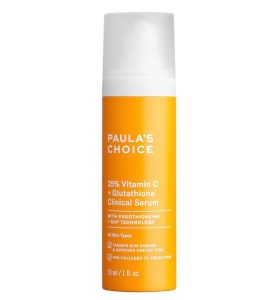
Paula’s Choice 25% Vitamin C + Glutathione Clinical Serum
Drunk Elephant C- Luma Hydrabright Serum

Ole Henriksen C-Rush Vitamin C Gel Moisturizer
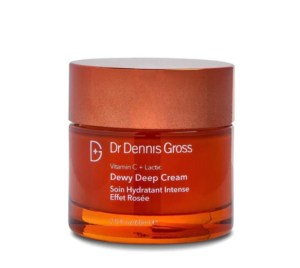
Dr Dennis Gross Skincare Vitamin C Lactic Dewy Deep Cream
Sunday Riley C.E.O. Glow Vitamin C +Turmeric Face Oil

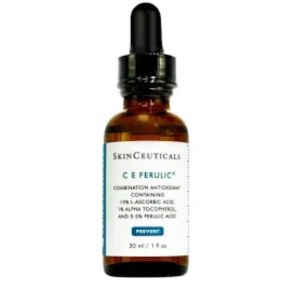
SkinCeuticals C E Ferulic

Supergoop Daily Dose Vitamin C + SPF

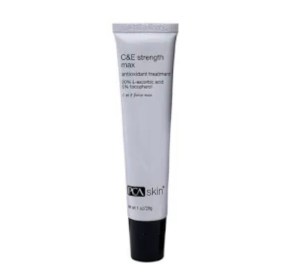
PCA Skin C&E Advanced Serum

Hyper Skin Brightening Clearing Vitamin C Serum
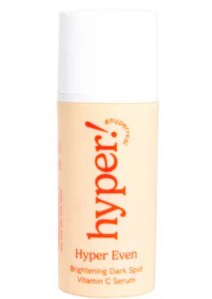
Naturium Vitamin C Complex Serum

Loved this post?  Comment down below  and subscribe to beautygrind to receive the latest blog posts filled with industry researched and professionally experienced resources, tips, tricks, and inspiration delivered to your inbox. 

For business inquiries regarding Beautygrind.com, email me at info@khalilahneals.com

Need one on one consulting, customization or updates for your beauty and fashion questions and concerns, visit khalilahneals.com  and fill out the “work with me” form.

Shop My Closet https://poshmark.com/closet/khalilahneals

  1. Mount Sanai “Vitamin C ascorbic acid”
  2. Mount Sanai “Vitamin C ascorbic acid”
  3. Healthline “11 Reasons To Add Vitamin C To Your Skincare Routine”
  4. City Skin Clinic “All The Different Vitamin C Skincare & And How To Find The Best One  For You”
  5. City Skin Clinic “All The Different Vitamin C Skincare & And How To Find The Best One  For You”

What Is Bakuchiol And Is It Worth The Hype?

In beauty, skincare on September 5, 2022 at 12:00 pm

Growing older is inevitable. We know this. And there is nothing wrong with making adjustments to ensure that this process is smoother, and more graceful instead of throwing caution to the wind and letting life have its way with our health, well-being and even our looks.

Retinol has always been and will most likely remain the gold standard in skincare when it comes to preventing and softening the signs of aging. Derived from Vitamin A, retinol works on a cellular level to push newer cells to the surface. It instructs skin to produce collagen which is responsible for firm, plump skin. Retinol is an anti-inflammatory and antibacterial and can actually help with breakouts as opposed to or in addition to ingredients such as salicylic acid. As a matter of fact, Retin A from which retinol is derived was initially prescribed for acne. Patients who used it for acne noticed that their skin was more clear with less hyperpigmentation in addition to having fewer acne/breakouts.

But retinol can propose a downside for some users. Retinol can be extremely harsh on the skin. It can cause irritation, redness, peeling and drying. Not a good look for something that is supposed to be so helpful.

Enter bakuchiol. Ba-ku-chi-who? Bakuchiol (pronunced ba koo chee yol). Bakuchiol comes from the leaves and seeds of the babchi plant (psoralea corylifolia). It is native to countries India and Sri Lanka and is used in ancient Chinese and Ayurvedic skin treatments. Although bakuchiol is not new, it is gaining popularity as an effective skin care ingredient. So why the comparison to retinol? For starters although they are molecularly different, they have similar qualities. Bakuchiol is 100% plant derived and retinol comes from Vitamin A and is usually synthetically produced. They both help with brightening, firming, collagen production and hyperpigmentation. Bakuchiol, however, is perfect for sensitive skin and can be tolerated on eczema, psoriasis prone or active skin (breakouts). In these cases, retinol may not be as beginner friendly. Although it is probably best to use bakuchiol at night, some will use bakuchiol am and pm whereas retinol should be used in the evening followed by sunscreen in the morning. Bakuchiol is vegan friendly and is safe for pregnant and nursing women. On the other hand, it is recommended to refrain from retinol use during pregnancy and breastfeeding. Overall there is no side effect with bakuchiol. With retinol it is suggested to gradually increase application and make sure you are using a moisturizer to counteract any side effects such as drying, peeling and redness. In addition, bakuchiol is good for mixing with other ingredients that could otherwise not be tolerated in some skin. The combination of retinol and AHA, BHA, and Vitamin can be too active or potent for more sensitive skin and can spell disaster.

When it comes to choosing bakuchiol or retinol, you would need to consider your skin type and whether are you sensitive or not. Do you prefer products that are vegan? Do you have certain views on the use of synthetics in skincare ingredients or does it matter?

There has been extensive research on the efficacy of retinol whereas the research on bakuchiol and its long term effects and uses is not as extensive as of yet. Read the directions on the product that you choose whether it is bakuchiol or retinol. Also, keep in mind that just because a product is natural doesn’t mean you wont have an adverse reaction to it.

Acure Radically Rejuvenating Dual Phase Bakuchiol Serum $19.99. This serum is dual phase product that is rich in powerful antioxidants and hydration as well as anti-aging support in the form of plant based bakuchiol.

Herbivore Bakuchiol Retinol Alternative Smoothing Serum $54. Perfect for the most sensitive skin, this serum will help smooth look of fine lines as well as help to retexturize and brighten the skin.

The Inky List Retinol Alternative Moisturizer $11.49. This cruelty free lightweight cream will help to moisturize will it softens fine lines, wrinkles, dullness and uneven texture.

Credo Beauty 1% Bakuchiol + Olive Squalane Oil Booster $10. This booster is made without a number of questionable ingredient and makes it easy to incorporate into your existing skincare routine. Bakuchiol will help with fine lines and wrinkles while squalane will boost hydration. Mix with your current moisturizer or serum or use by itself.

Paula’s Choice 0.3% Retinol + 2% Bakuchiol Treatment $56. This treatment harnesses the power of retinol, bakuchiol and peptides to help fight wrinkles. dullness and loss of firmness and elasticity. The lightweight formula absorbs quickly into the skin.

Loved this post?  Subscribe to beautygrind to receive the latest blog posts filled with resources, tips, tricks, and inspiration delivered to your inbox. 

For business inquiries regarding Beautygrind.com, email me at khalilah@beautygrind.com

Need one on one consulting, customization or updates for your beauty and fashion questions and concerns, visit khalilahneals.com and fill out the “work with me” form.

14 Products To Help You Get Rid Of Dark Spots

In beauty, skincare on July 31, 2020 at 10:12 am

I believe it is safe to say that anyone’s skin goal is to have clear, blemish free, glowing skin.  And while many of us may have a good skincare routine in place to support those goals, there are certain times in our lives where annoying discoloration rears its ugly head – better known as hyperpigmentation.

What exactly is hyperpigmentation?

Hyperpigmentation is the general term for the types of discoloration that show up on the skin and is caused (in simple terms) by the overproduction of or excess melanin production.  It can appear as pink or red spots/scarring in fair skin tones and as brown/black spots/scarring in deeper skin tones.  There are various causes (or results) of hyperpigmentation, the most common being melasma, sun exposure and post inflammatory.  Melasma is thought to be caused by (but not limited to) hormonal fluctuations, particularly from pregnancy or oral contraception use.  Sun exposure can cause discoloration from overexposure to tanning beds or lack of using a sunscreen.  Post inflammatory hyperpigmentation is very common and can come from various skin trauma such as acne, eczema and other skin rashes.  Whatever the case, this type of persistent discoloration can cause a lot of frustration and your self confidence can suffer.

There are many solutions to treating hyperpigmentation.  One of many is in the doctor’s office with the use of lasers, peels, microdermabrasion or other procedures.  These can have various recovery times and result rates as well as the occasional higher price tag that may not fit in one’s budget.  Depending on the severity and depth of discoloration however, a trip to the doctor’s office may be the better option.

For cases that are mild to moderate,  there are many over the counter (OTC) solutions that can yield the results you may be looking for.  These solutions include serums, creams, toners, gels, peels and moisturizers.  When shopping for products, these are some key ingredients to look for:

  • Kojic Acid.  Derived from mushrooms.  Inhibits pigment production.
  • Arbutin.  Derived from bearberry.  It is a natural derivative of hydroquinone which is considered to be the gold standard in skin lightening.  Arbutin, aka alpha arbutin, is a pigment inhibitor and permits the slow release of actives, making it great for sensitive skin.
  • Glycolic Acid.  A well known AHA, glycolic acid is derived from sugar cane and provides chemical exfoliation of the uppermost layers of dead skin cells which helps to fade discoloration.  Glycolic acid helps with smoother skin texture as well as helps to promote even skin tone and clarity as well as helps with signs of aging.
  • Lactic Acid.  An AHA derived from milk, lactic acid works in a way similar to glycolic acid.  It is thought to be more gentle and helps to exfoliate and brighten dark spots.
  • Retinol.  A derivative of vitamin A, retinol helps skin cells to regenerate more quickly, revealing smoother, brighter, more clear skin and addresses the signs of aging (fine lines, wrinkles, collagen production, elasticity, dullness).  It is also an anti-inflammatory and can help clear skin and prevent acne.
  • Niacinamide.  A form of vitamin B3, niacinamide, which is easily absorbed into the skin, is also an anti-inflammatory.  It helps to unclog pores, reducing the blemishes which can eventually lead to dark spots.  Niacinamide also helps with oil production and helps to treat redness.
  • Vitamin C.  Derived from citrus fruit, vitamin C inhibits melanin production which can help keep new dark spots from occurring.  It is also a chemical exfoliant so it sloughs off dead skin cells.
  • Willowbark.  This ingredient can come from either the white or black willow bark tree.  It is a natural form of salicylic acid, a BHA that is used to treat acne and remove dead skin cells which leads to the eventual fading of dark spots.
  • Licorice Root.  Beyond the candy that you may have loved or hated as a child, licorice root hinders free radical production and excessive melanin production, both of which can lead to hyperpigmentation.
  • Hydroquinone.  Hydroquinone is a popular skin lightening agent found in many products that are created to address concerns of  discoloration.  It is a compound that works to block/hinder an enzyme in melanin production.

Before you head to the doctor’s office for a procedure, consider trying one of the following products first.  If you don’t see the results you are looking for then make an appointment at your doctor’s office:

  • Dr Murad Rapid Age Spot And Pigment Lightening Serum. $72.  Created with 2% hydroquinone (clinically proven to fade dark spots), glycolic (exfoliation) and a hexapeptide (skin brightening), this serum includes the ingredients to get you the results you are looking for.  It is intended to be applied all over but can also be  used as a spot treatment.
  • Ambi Fade Cream For Normal Skin $6.49  This cream also contains hydroquinone,  as well as alpha hydroxy acids and vitamin E to help even and hydrate the skin.
  • Sunday Riley Good Genes $85   Good Genes can be used either day or night.  It helps to plump fine lines and wrinkles, boosts radiance and smooths texture.  Good Genes also tackles uneven skin tone with lactic acid and licorice root extract.
  • Neutrogena Rapid Tone Repair Dark Spot Corrector $22   The key ingredients of retinol and vitamin C create a gentle yet effective formula for getting rid of dark spots.
  • Ole Henriksen Glow2OH Dark Spot Toner $29 –    The high concentration of actives (glycolic and lactic acid as well as witch hazel water) allows you to swipe away dull skin, discoloration and even target fine lines and wrinkles.  Ingredients such as  chamomile helps to sooth the skin, making this toner gentle enough for daily use.
  • Cane + Austin Miracle +30% Glycolic Acid Peel Pad $88   These pre-medicated 30% glycolic acid pads allow you to swipe away dull skin, treat acne (including hormonal) and help target signs of aging.  Continual use can help with dark spots  and can be used daily – even on sensitive skin.
  • Good Molecules Discoloration Correcting Serum $12  For just $12 this lightweight serum that can be used day and night contains tranexamic (specifically targets dark spots) and 4% niacinamide.  This serum also targets age spots and sun damage.
  • Dr Dennis Gross Clinical Grade IPL Dark Spot Correcting Serum $92   This serum contains powerful ingredients to deliver office procedure level results.  Key ingredients of kojic, lactic and L-ascorbic acid as well as arbutin help to resurface the skin and not only targets post acne scarring and sun damage but also the signs of aging in just weeks.
  • Renee Rouleau Advanced Resurfacing Serum $86.50   This retinol cream is actually safe for sensitive skin and those who have not been able to tolerate other retinol  products.  Because it is a retinol, you will get the added benefit of targeting deeper signs of aging such as loss of collagen production and elasticity.
  • Beauty Counter Overnight Resurfacing Peel $63  Contains a mix of powerful AHA/BHA as well as arginine and essential fatty acids to help with smoother texture as well as brighter, more clear skin.
  • Slurp Niacid 50ml $42   Like other effective products, Slurp Niacid contains niacinamide and transexamic.  However, the added benefit is that this particular product also helps to raise indentations (pitting) that can be caused by severe acne.
  • PCA Skin Pigment Gel $64  The key ingredient of this gel is 2% hydroquinone and is effective on all skin types and all types of discoloration including hormonal and  sun damage
  • Clinique Even Better Clinical Radical Dark Spot Corrector + Interrupter $52.50    A brightening serum that helps with the discoloration of today with ingredients such as salicylic acid and glucosamine, but also helps to interrupt discoloration of the future with ingredients such as gyokuro and mulberry root.  Patented CL302 Equalizer Technology (damage eraser) penetrates up to 21 layers of  the skin.
  • Kiehl’s Clearly Corrective Dark Spot Solution $54   This dark spot solution can be used as a spot treatment or all over the face (am and pm).  It contains 3 potent ingredients: Activated C (vitamin C) for clarity and even skin tone, white birch extract for hydration and nutrients and peony extract for prevention of oxidative damage.

Regardless of whatever skincare products you are using, be sure to use a sunscreen with at least a 30 SPF.

Do you struggle with  hyperpigmentation?  If so, what has been your go-to product to help clear up your skin?

Loved this post?  Subscribe to beautygrind to receive the latest blog posts filled with resources, tips, tricks, and inspiration delivered to your inbox.

Need one on one consulting, customization or updates for your beauty and fashion questions and concerns, visit khalilahneals.com.